
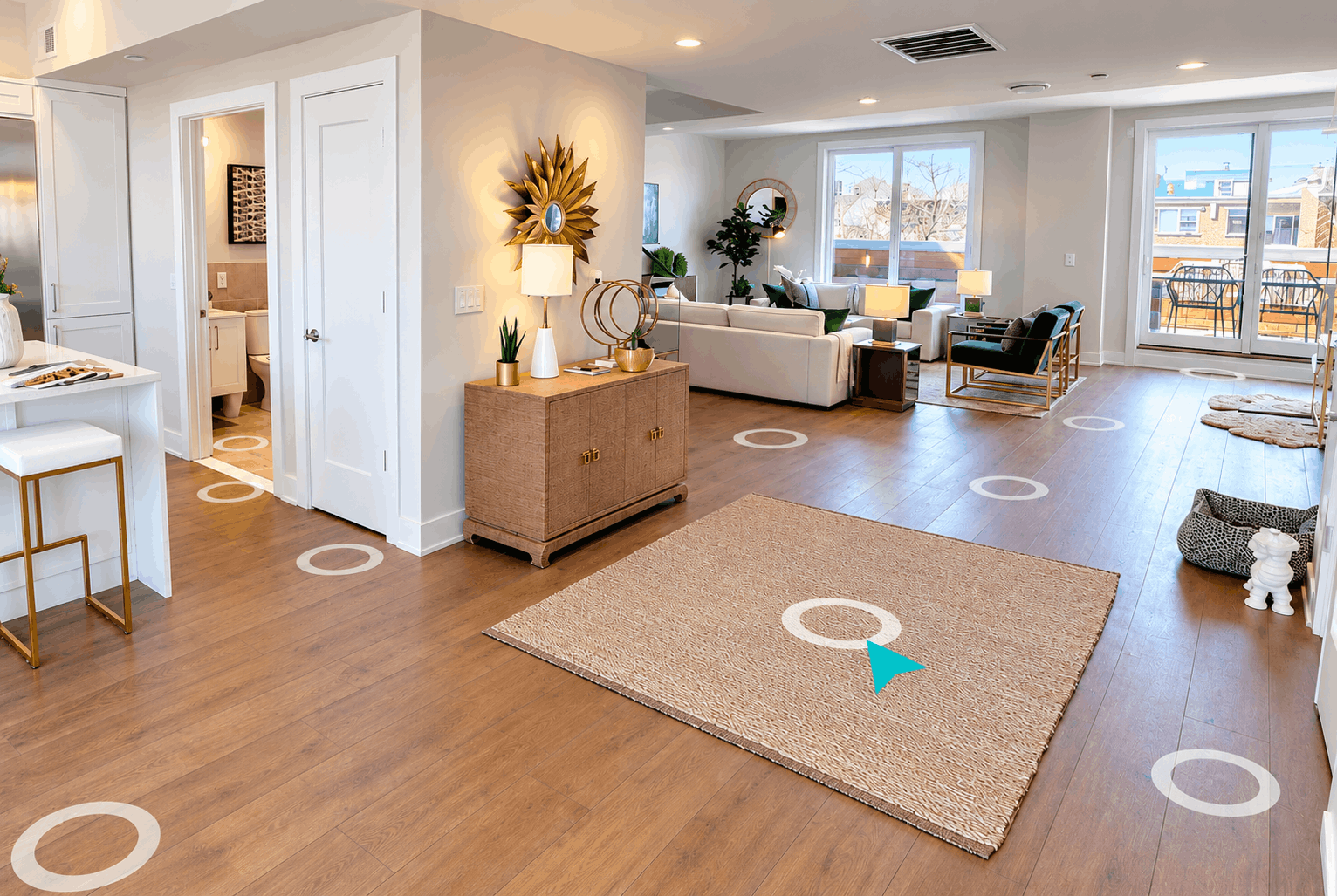
Creating a virtual tour for the real estate sector has, in recent years, become one of the most powerful transformations in how properties are presented, evaluated and sold. In a fast-moving market, where decisions are made quickly and competition is fiercer than ever, simply posting a few photos is no longer enough. Today's buyers and tenants want to understand the space, feel it, walk through it visually before taking the decisive step. The virtual tour answers exactly this need, offering a complete, realistic and convincing experience.
Real estate has always been about location, price and potential. But in the digital age, presentation is what makes the difference. A real estate agency that invests in a professionally made virtual tour doesn't just showcase its properties - it tells a story. A story in which the future buyer can already picture themselves living there, moving in, decorating, living their life. This emotional component is essential and often decisive.
The real estate market and changing buyer behavior
Real estate buyer behavior has changed radically. Most searches start online, whether we're talking about apartments, houses, commercial spaces or offices. Visitors spend time comparing listings, analyzing details and quickly ruling out properties that don't match their expectations. In this context, a virtual tour offers a major advantage: it speeds up the selection process and better qualifies potential customers.
A real estate listing that includes a virtual tour attracts more attention and keeps users on the page longer. They're no longer a mere spectator - they become an explorer. They can look around, assess room proportions, understand the flow between spaces and notice details that don't show up in a static photo. As a result, interest becomes deeper and more genuine.
Why the virtual tour is superior to classic photos
Photos remain important, but they have clear limits. They're chosen angles, fixed frames, sometimes overly optimized, that don't convey the full reality. The virtual tour, on the other hand, offers transparency. It shows the space as it is, with no tricks, no selective cropping. This visual honesty builds trust, and in real estate, trust is a key factor.
A virtual tour lets you view the apartment from any angle, gives a real sense of its dimensions, and helps you understand how the rooms relate to one another. The buyer can see how natural light enters, how airy the space feels, where the windows are, and how the kitchen connects to the living room or the bedroom to the bathroom. All these details matter enormously when making a decision.
The role of a professional team in creating the virtual tour
The difference between an ordinary virtual tour and a truly effective one comes down to the professionalism of the team that creates it. A team specialized in virtual tours for real estate doesn't just photograph a space with a 360 camera. They understand the market, know what buyers are looking for and how to showcase an apartment or a house to its best advantage.
Professionals know how to prepare the space before shooting, how to choose the optimal capture points, how to manage light and avoid distortion. A properly made virtual tour flows well, is easy to navigate and is visually pleasant. Transitions are natural, the image is clear, and the user experience is intuitive.
What's more, a professional team knows how to tailor the virtual tour to the type of property. A luxury apartment will be presented differently than a studio meant for rent, or an office space. The focus is on the property's actual strengths, without exaggeration, but with a clear presentation strategy.
Why real estate agencies should present interiors through a virtual tour
The interior is, without a doubt, the decisive element in most real estate transactions. The façade, the area and the floor matter, but it's the interior space that determines whether a buyer moves forward or not. The virtual tour offers the best way to present this interior in a complete and convincing manner.
For real estate agencies, the virtual tour means time savings and increased efficiency. In-person viewings are better filtered, since the people who attend them are already interested and informed. This reduces unnecessary visits, saves time for both the agent and the owner, and makes the sales or rental process more fluid.
Another major advantage is eliminating geographical barriers. A customer from another city or another country can view the property in detail without being physically present. This opens the market to a much wider audience and increases the chances of closing a deal faster.
Where to publish a real estate virtual tour
A virtual tour is an extremely flexible tool and can be used across multiple channels. First of all, it needs to be integrated into the real estate agency's website or into the page dedicated to each property. That's where it has the greatest impact, since it's seen by customers who are already interested.
The virtual tour can also be shared on real estate listing platforms that support interactive content, or through a direct link in the description. Having a virtual tour in a listing instantly makes it stand out from similar offers.
Another very important channel is Google, through business profiles or direct indexing of pages containing the virtual tour. Social media is, in turn, an excellent promotional medium. Snippets from the virtual tour, or links to it, can generate interest, shares and organic views.
Last but not least, the virtual tour is a valuable tool in direct communication with customers. It can be sent by email, WhatsApp, or included in presentations for investors. In practice, it becomes a digital business card for the property.
How many new customers a virtual tour can bring
The impact of a virtual tour on the number of customers is significant. Properties that include virtual tours attract more views and generate more qualified inquiries. Industry studies show that listings with a virtual tour can increase interest rates by tens of percent, and the time users spend on the page is considerably higher.
More important than the raw number of customers is their quality. Those who explore a virtual tour are more decided, better informed and closer to a final decision. This leads to more efficient negotiations and a higher conversion rate.
Long-term, using virtual tours helps build a professional image for the real estate agency. It's perceived as modern, transparent and customer-focused. In a market driven by recommendations and reputation, these aspects are extremely valuable.
The future of real estate presentation
The virtual tour is no longer a technology of the future - it's a reality of the present. As buyers become more demanding and better informed, their expectations rise. Real estate agencies that quickly adopt these solutions strengthen their market position and gain a clear competitive advantage.
In the future, virtual tours will become the standard, not the exception. Those who invest in such tools now are simply aligning themselves with an inevitable direction. Working with a professional team ensures not only a good technical result, but also a coherent presentation and sales strategy.
In conclusion, creating a virtual tour for the real estate sector is one of the most effective and intelligent investments a real estate agency can make. It's a solution that combines technology with sales psychology, offering transparency, efficiency and emotional impact. In a market where every detail counts, the virtual tour becomes an essential ally, capable of turning simple online views into real, lasting transactions.
1 comment
Vreau sa stiu cat costa un tur virtual pentru un hotel cu 25 de camere si 3 etaje.
Va multumim pentru interes. V-am trimis pe email o oferta personalizata.
Leave a comment
Replying to -