
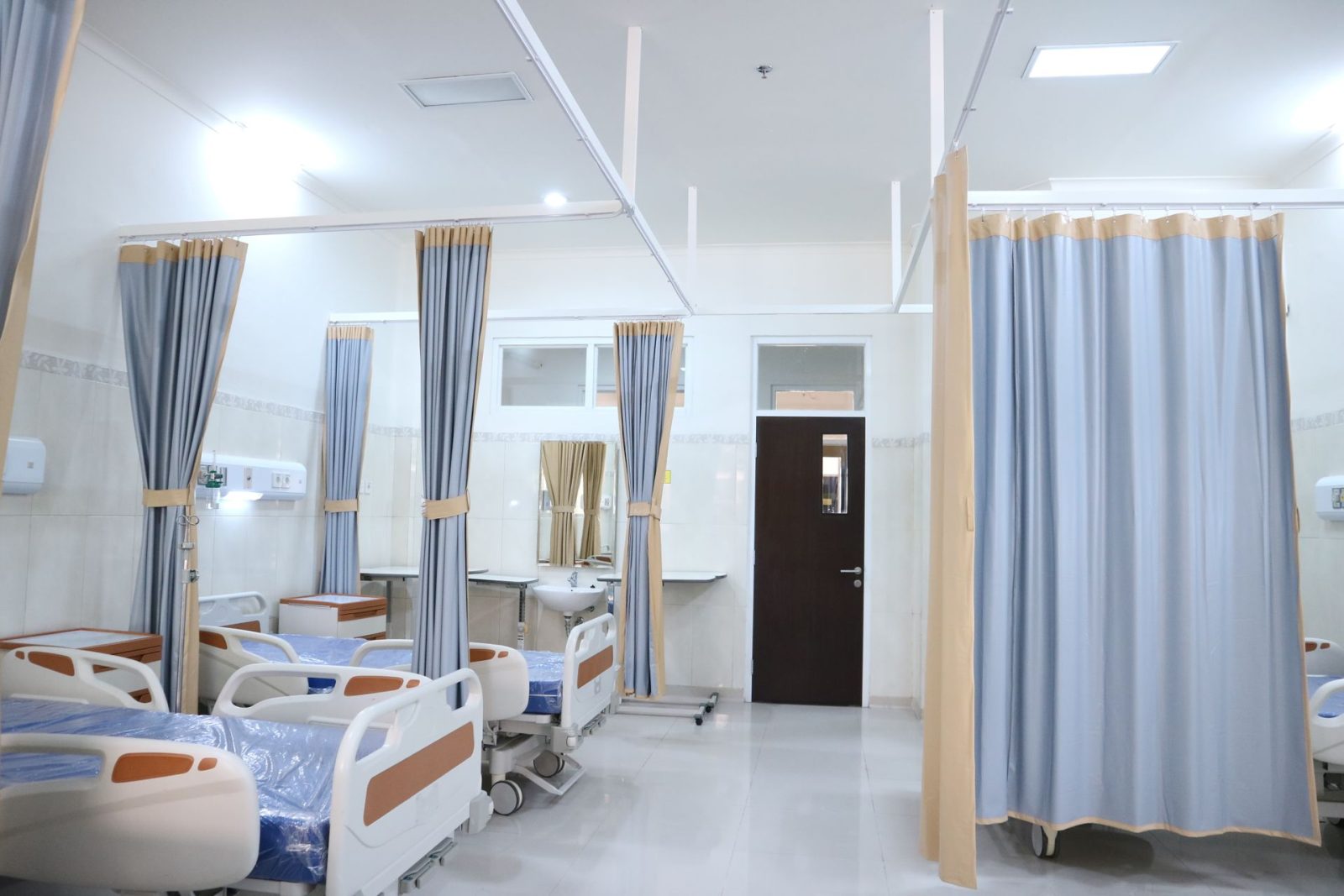
In healthcare, first impressions matter. Patients looking for a clinic, a medical practice or a rehabilitation center increasingly check the information available online before booking an appointment. Alongside the services offered, the doctors' specialties and the contact details, the look and atmosphere of the space can shape the impression a person forms of a medical facility.
In this context, 360 photography for clinics is a modern way to present medical spaces. Unlike conventional photos, which capture a room from a single angle, 360° photography lets people view the space in every direction. Patients can virtually explore the reception, the waiting room, the consultation rooms, the corridors or other areas that can be shown publicly.
A virtual tour made with 360° images can turn a clinic's website into a more interactive visual experience. Instead of seeing only a few selected photos, visitors can move through the space and get a clearer picture of the environment they are going to.
360 photography for clinics can be used by private clinics, medical practices, dental clinics, rehabilitation centers, medical imaging centers, diagnostic centers, aesthetic clinics, wellness centers and other medical facilities that want to present their spaces professionally.
What is 360° photography for clinics and medical centers?
360° photography is a technique that captures the entire visible space around the point where the photo is taken. The resulting images can be processed and integrated into an interactive interface, so that users can look around, up and down and explore different areas of a room.
For a clinic, a 360° photo can turn a simple image of the reception into an interactive experience. The person viewing the virtual tour can see where the reception desk is, the waiting area, the furniture, the finishes, the lighting and the way into other rooms.
Several 360° images can be linked together. This creates a 360° virtual tour of the clinic, in which users can move from the reception to the waiting room, and then on to the consultation rooms or other areas that can be shown publicly.
This kind of presentation can be especially useful for clinics that invest in the design of their spaces and want patients to be able to see online the environment they will arrive in.
However, 360 photography for clinics needs careful planning. Not every room has to be included in a virtual tour. Spaces containing confidential information, documents, equipment or activities not intended for the public should be excluded or handled appropriately.
The photos should also be taken at a time when the space is ready and no one is captured without their consent. In a medical setting, protecting privacy and confidential information must be a priority.
Visually, the purpose of 360° photography is not just to show an attractive space. The image needs to be clear, balanced and realistic. Patients should be able to understand the layout of the space and form an accurate impression of the clinic.
That is why 360 photography for clinics can be seen both as a photography service and as a visual communication tool.
The benefits of 360° photography for clinics
One of the most important benefits of 360 photography for clinics is that it presents the space more completely than classic photos.
An ordinary photo can show the reception from one particular point of view. A 360° image lets users look around and view the space from whichever direction interests them.
For patients, this difference can matter. Someone who has never visited the clinic can see in advance what the entrance looks like, where the reception is and how the waiting area is laid out. This can make the first visit easier to anticipate.
A more transparent presentation of the space
A 360° virtual tour makes it possible to present the space more transparently. Instead of a limited selection of photos, users can visually explore a larger part of the clinic.
For modern clinics that have invested in architecture, interior design and equipment, this can help communicate the brand image.
The reception, waiting room, consultation rooms and common areas can be presented consistently. Colors, materials, furniture and lighting can be seen in a context closer to reality.
Less uncertainty before the first visit
For some people, a first visit to a medical facility comes with simple questions: What does the clinic look like? Where is the reception? What is the waiting room like? What does the consultation room look like?
With 360 photography for clinics, some of this information can be provided before the patient physically arrives.
The virtual tour does not replace an in-person visit and has no medical role, but it can give information about the physical environment in which the consultation or treatment takes place.
A tool for promoting the clinic
360° photography can be integrated into the clinic's website, into pages dedicated to specific services or into other online presentation materials.
A virtual tour can be used to promote a new clinic, to present renovated premises or to highlight modern spaces.
For a newly opened clinic, 360° photos can help present its visual identity and its space before patients visit.
Presenting large spaces more effectively
For large medical centers, a photo gallery can become hard to follow. A virtual tour can organize the user's experience more logically.
For example, it can start at the reception, go into the waiting room and then lead to different consultation rooms or areas of the clinic. Each point of interest can be linked through interactive navigation.
This structure can be useful for multidisciplinary clinics, rehabilitation centers, private hospitals and medical centers with several departments.
Where can 360° photography be used in healthcare?
360 photography for clinics can be adapted to many types of medical spaces. Each category has its own particularities, and the virtual tour should be built around the goal of the presentation.
Private medical clinics
Private clinics can use 360° photography to present the reception, waiting areas, consultation rooms and other spaces intended for patients.
For a multidisciplinary clinic, the virtual tour can include several departments and help users understand the overall layout of the location.
Dental clinics
For dental clinics, the patient experience begins before entering the treatment room. A virtual tour can show the reception, the waiting room and the treatment rooms, giving an idea of the environment in which treatments take place.
Depending on the clinic's policy, certain equipment or technologies can also be shown if they are relevant to communicating its services.
Rehabilitation and physiotherapy centers
Rehabilitation centers can benefit from 360° photography to present treatment rooms, physical therapy areas and recovery spaces.
The size and layout of these centers can be understood more easily when patients can explore the space visually.
Imaging and diagnostic centers
For imaging centers, 360° photography can be used to present areas open to the public, such as the reception and the waiting room.
In these projects, it is important to choose carefully which spaces are photographed and to avoid showing information that is not intended for the public.
Aesthetic clinics and wellness centers
For aesthetic clinics and wellness centers, the look of the space can be part of the experience offered to clients. The interior design, atmosphere, reception and treatment rooms can be presented through 360° images.
In these fields, 360° photography can complement traditional commercial photography and video.
Newly opened practices and medical centers
A new practice or a recently renovated clinic can use 360° photography as part of its online launch.
The presentation of the space can be included on the website and paired with information about services, specialties, the medical team and how to book appointments.
In all these cases, 360 photography for clinics should pursue a clear goal: presenting the space in a professional, realistic and accessible way.
How is a professional 360 photography project for a clinic carried out?
The quality of a virtual tour starts before the photos are taken. The space needs to be prepared so that the images convey a professional and coherent impression.
First, the rooms to be photographed need to be decided. Not every space in the clinic has to be included. It is best to select the areas that are relevant to patients and can be shown publicly.
The reception and the waiting room are usually key points. Depending on the clinic, consultation rooms, treatment rooms, rehabilitation rooms or other spaces can be added.
Before the shoot, the rooms should be tidied. Documents, computers with visible information, patient records and other confidential materials must not appear in the photos.
People captured in the images also need careful handling. In a medical setting, patients or staff should only be photographed under appropriate conditions and in line with the applicable data protection and image rights requirements.
Technically, the camera needs to be positioned so that the image gives a natural view of the space. Camera height, lighting, the shooting position and image processing all affect the final result.
Particular attention must be paid to stitching the images and rendering the space accurately. Architectural lines should look as natural as possible, and distortion should be kept under control.
After the shoot, the panoramas can be linked into a virtual tour. Navigation points, room names and, depending on the platform, additional information can be added.
A well-organized tour should be easy to use. Users should be able to tell where they are and how to get to the next area.
360 photography for clinics is not just about producing technical 360° images. The end result should be a coherent, intuitive experience tailored to the needs of the clinic and its patients.
Frequently asked questions about 360° photography for clinics
What is 360° photography for clinics?
360° photography for clinics is a technique for creating interactive images of medical spaces. They can be used individually or linked into a virtual tour that lets people explore several rooms.
Which areas of a clinic can be photographed in 360°?
The reception, waiting room, consultation rooms, treatment rooms, rehabilitation spaces and other areas intended for public presentation can be photographed. It is best to select the spaces that are relevant to patients.
Why is 360° photography useful for a clinic?
360° photography lets patients explore the space visually before their first visit. It can show more about the clinic's layout and contribute to a more complete online presentation.
Can the 360° tour be integrated into the clinic's website?
Yes. A virtual tour can be embedded in a page of the clinic's website, so visitors can explore the space directly in their browser.
Is 360° photography suitable for dental practices?
Yes. Dental practices can use 360° photography to present the reception, the waiting room and the treatment rooms, giving patients a view of the space before their appointment.
How should a clinic be prepared before the shoot?
The spaces should be tidied and prepared for the shoot. Documents, patient data and confidential information must be removed or hidden, and people must not be photographed without appropriate consent.
Does 360° photography replace a clinic's classic photos?
No. The two complement each other. Classic photos can highlight details, equipment, staff or particular design elements, while 360° photography lets people explore the space.
0 comments
No comments yet - be the first to leave one.
Leave a comment
Replying to -