
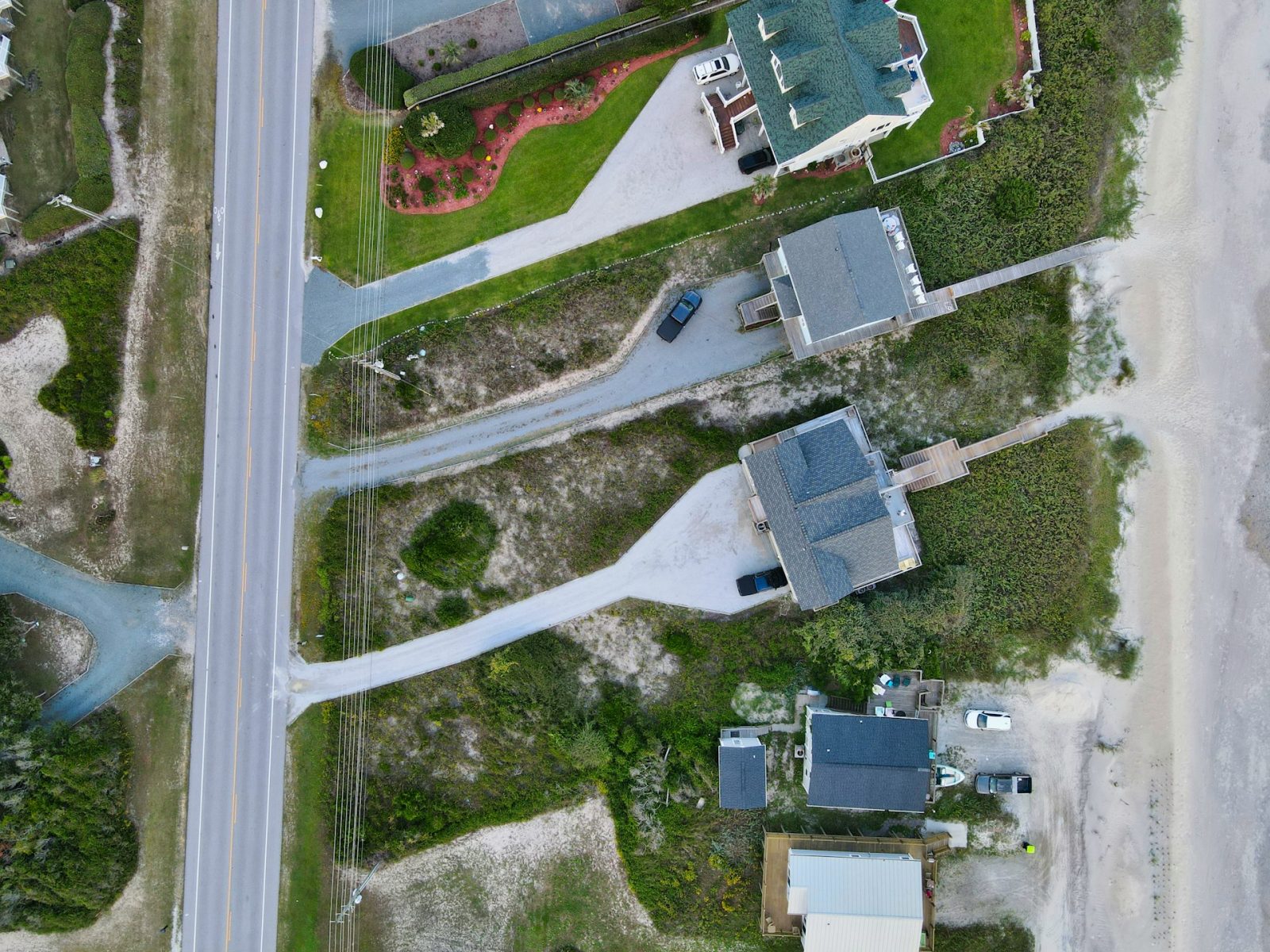
Technical inspections often involve checking large surfaces, structures at height or areas that are difficult to reach. Roofs, facades, industrial halls, steel structures, photovoltaic panels, poles, infrastructure, construction sites and outdoor installations may all need periodic checks to identify problems and to document the condition of the site.
Using drones for the visual documentation of these sites has become an efficient solution for many types of project. A drone fitted with a capable camera can supply high-resolution stills and footage without the operator having to reach every inspected area directly.
Aerial filming does not replace the expertise of an engineer, a specialist or a licensed inspector, but it can be an important tool for gathering visual information. The resulting material can be used to document the existing condition, to make a preliminary identification of areas needing attention, to follow the progress of works and to build a visual archive of the site.
What can drones document during a technical inspection?
One of the most important advantages of using a drone is visual access to areas that are difficult or costly to check by conventional means. Depending on the site and the operating conditions, large exterior surfaces and elements at height can be documented.
Roofs are a very good example. For commercial buildings, industrial halls, warehouses, hotels or large properties, a visual check of the roof can mean physical access and additional safety measures. Drone footage can give an overview of the whole surface and highlight areas that call for further analysis.
Building facades can likewise be documented from various distances and angles. High-resolution imagery can help with the visual observation of cracks, damage, detached material, changes to finishes or other aspects that a specialist should analyze afterwards.
For industrial halls and buildings, a drone can be used to document roofs, facades, exterior structures, chimneys, installations and other hard-to-reach elements.
Construction sites are another important category. Aerial footage can document the progress of works at different points in time. By running periodic sessions, the client obtains a visual record of how the project has developed, which can be used when communicating with clients, contractors, investors or anyone else involved in the project.
Aerial photographs and footage can also be useful for documenting land, infrastructure, roads, parking areas, industrial platforms or other large surfaces.
The advantages of drone filming for technical documentation
One of the main advantages is that it reduces the need for physical access to certain areas. When a surface is at height or in a hard-to-reach place, obtaining an aerial perspective can be more efficient than sending a person to every point of the site.
This can shorten the time needed for visual documentation and allows an overview to be obtained before any physical intervention.
Another advantage is the amount of visual information that can be collected in a single session. A drone can take photographs and footage from several directions, angles and altitudes, according to the specifics of the site. The same structure can therefore be documented both through general shots and through close images of particular areas.
4K resolution is especially useful for technical filming, because it preserves a high level of detail. The material can be analyzed later on a monitor, or used to select the relevant frames.
Aerial photography complements filming. While video gives a continuous view of the site, photographs allow individual frames to be examined and are more easily built into reports, presentations or archives.
Documentation over time is another important benefit. For construction, maintenance or refurbishment projects, photo sessions can be scheduled at set intervals. Comparing the images obtained at different stages gives a clear picture of how the project has progressed.
This kind of documentation can be valuable both for the client and for the teams managing the project.
From visual documentation to project monitoring
Drone use need not be limited to a single inspection. For construction projects or maintenance works, aerial filming can be carried out periodically to build a complete visual archive.
A project can be documented before works begin, during the main stages of execution and after completion. The images can be arranged chronologically and serve as a reference for the project's development.
For property developers, this method can be useful for monitoring construction sites and for showing progress to investors or future buyers. For construction companies, the material can help archive the stages of work and communicate progress visually.
For industrial or commercial properties, periodic visual inspections can help identify areas needing a closer look. If changes to a facade or a roof are observed during a session, for example, that area can then be passed to a specialist for assessment.
This approach can help prioritize work better, though the technical conclusions must be drawn by people qualified in the relevant field.
Aerial filming can also be useful for documenting unforeseen events, such as damage caused by weather. Photographing and filming an affected area gives an overall view of the scale of the situation and contributes the visual documentation needed for later assessments.
Depending on the nature of the project, material can be delivered as high-resolution photographs, 4K video or a selection of relevant frames. Where necessary, it can be organized so that each area or stage is easy to identify.
How does a professional inspection filming session work?
An aerial documentation session has to be prepared around the characteristics of the site. Before filming, it is important to establish the area of interest, the elements that need documenting and the type of material required.
For a roof, for instance, general shots, photographs from various directions and close images of the relevant areas may all be needed. For a construction site, the emphasis may fall on documenting progress and comparing the stages of execution.
Flight planning also has to take account of safety conditions, the weather, the available space and any flight restrictions that apply to the location. In Romania, certain areas may carry restrictions or special conditions, which is why the operation must be checked and carried out in line with the applicable requirements.
Filming is followed by selection and processing. The final material can be corrected for light, color and exposure so that the details are as easy to see as possible. In technical documentation, it is important that processing does not alter the relevant visual information.
The original files can be kept separately, and the final photographs and footage delivered to the client according to the package chosen. If the project requires the raw files, they can be requested and delivered separately, on terms agreed before the shoot.
It is worth stating clearly that drone filming is visual documentation and does not in itself constitute an expert opinion or a licensed technical inspection. Visually identifying a possible problem is not automatic confirmation of a fault. The technical interpretation of the imagery and any determination of causes or of the measures required must be made by a qualified specialist.
The drone should therefore be seen as a tool that complements the inspection process, not as a substitute for professional expertise.
In short, drone filming can bring a real advantage to the technical documentation of buildings, structures, infrastructure and other sites. Access to aerial perspectives, the ability to document hard-to-reach areas, high resolution and the capacity to compare images taken over time make aerial filming a practical tool for many types of project.
For results that are genuinely useful, however, the success of such a session depends on the flight preparation, the choice of shots, the operating conditions and the way the material is processed and organized afterwards. Used properly and alongside technical specialists, drone filming can offer a valuable additional perspective on the condition and development of a site.
0 comments
No comments yet - be the first to leave one.
Leave a comment
Replying to -